Superb Costa Rican Coffee
Costa Rican coffee is the best due to the plant varieties used, the unique areas in which the coffee is grown, and how the coffee is processed and harvested. Costa Rica and coffee are nearly synonyms. The best and highest quality arabica coffee in the world is produced here. For sure, you love its taste. And if you have never been to Costa Rica, you are in for a treat.
In 1779, the first coffee plants were introduced from Cuba, and already in the 1820s, Costa Rica was the first Central American country to have a fully functional coffee industry. The mountain ranges, the equatorial climate, and most importantly, nutrient-rich soil is responsible for sweet coffee with crisp and vibrant acidity.
Thanks to incentives by the government, the coffee industry flourished and proliferated. Coffee Growing Regions of Costa Rica? The area of land where coffee is grown can have a considerable effect on its flavor.
The most important growing regions in Costa Rica are Tarrazu and the West Valley, followed by the Central Valley, Brunca, Guanacaste, Tres Ríos, Turrialba, and Orosi. It ideally grows in temperatures ranging from 18 to máximum 24°C. The altitude where most of Costa Rica´s coffee-growing regions are located is perfect for growing high-quality coffee.

As belonging to the South Pacific, we will concentrate on the Brunca region. It is the third-largest producer of coffee in the country, trailing just behind the West Valley and making up 20% of national coffee production. Most coffees grown here are generally at altitudes of 800-1200 masl.
There are farms in the area growing coffee much higher, closer to 1700 masl. Coffee from the lower and midland areas of Brunca often has a very soft flavor profile, while coffee in the higher-lying areas, such as Pérez Zeledón at 1700m, has more complex notes in the cup.

Harvesting Coffee:
During the dry season (from December up until April), the coffee is harvested. Before being transported to the processing facility for washing, sorting, fermenting, drying, and packing, the ripe coffee beans are picked by hand. Costa Rica has an excellent reputation for coffee.
Farmers are educating themselves with innovative farming techniques, the most famous being a unique, hybrid honey processing method which, by the way, has nothing to see with honey. During the de-pulping process, the beans will be covered in a sticky, thick, ‘honey’ like substance called mucilage, later removed during the fermenting process
Natural Processed Coffee
The ´dry´ processing method desiccates the cherry with the bean still inside below the hot tropical sun and with the right level of humidity. This naturally processed coffee can be an absolute treat.
The flavor complexity, sweetness, and standout acidity are a divine combination and difficultly found somewhere else.

How to Brew your Coffee?
You can brew the coffee the usual way. If you want to brew coffee like a ´tico´, the best way to do this is by using a Chorreador or “sock”. You should certainly try it! Preferably buy coffee from a local roaster, such as Café Don Emilio, present every Wednesday and Saturday at El Mercado in Uvita.
They sell Arabica coffee, in the qualities Catuai, Caturra and Venecia. This way, you can make sure the coffee is freshly roasted, and it´s always a good idea to support locals. As you know, coffee contains caffeine, is full of beneficial antioxidants.
It has essential nutrients, including vitamin B5 (for making red blood cells), manganese (for bone development and metabolism), potassium (for lower blood pressure), magnesium (for energy production), and niacin, which helps convert vitamins into useable energy. Overall, its consumption is supposed to improve the risk for type 2 diabetes, depression, neurodegenerative diseases, cancer, and liver disease.
What to do, Where to eat and Where to stay…
- Activities and Tours
- Whale Watching Tour
- Natural Attractions
- Marino Ballena National Park
- Restaurants
- Hotels and Accommodations
South Pacific Costa Rica Beaches,
Looking for business directories, maps or other printouts? We’ve got that too!
Dare to Discover and Enjoy…
Check out…
Need help planning your next trip? Let us help you with your Costa Rica vacations!
Email: carlos@ballenatales.com
Phone: +(506) 8946 7134 or +(506) 8914 1568
Free Costa Rica Magazine #101
Ballena Tales is an essential free digital magazine and travel guide in Costa Rica, valid for travelers, residents,
Restoring Nature with GrandiOSA
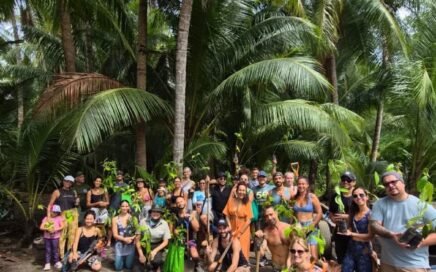
Grandiosa Costa Rica has a clear goal: to plant 4.000 trees per year. In the Osa region, such reforestation efforts occur regularly, with an average of about 100 trees planted per event

Ancestral Beauty More Than a Store, A Living Community
Located in the heart of Uvita, Ancestral is not just a boutique. A place for the community – something invisible begins to awaken.
Neuroplasticity and Migration
Neuroplasticity and Migration: The Science Behind Your Brain’s Remarkable Adaptation By Dra. Nikole Solano Vargas A Medical Perspective on What Really Happens When You Move to a New Country Have you ever stood in line […]
Biostimulators and exosomes: new strategies for skin rejuvenation
Biostimulators are injectable agents that stimulate the production of collagen and elastin, essential proteins responsible for skin structural integrity.
From gardening in Austria to gardening in paradise
From gardening in Austria to gardening in paradise Author: Elisabeth Frankel EDITORS’ NOTE: Dear readers, We are proud to include this wonderful article in this edition. Ms. Frankel contacted us to say that she had […]
Mercado Bahia Ballena: Discover Costa Rica´s Diversity
Mercado Bahia Ballena: Discover Costa Rica´s Diversity Author: Evi Heine Every Wednesday and Saturday from 8 a.m. to 1 p.m., a vibrant market takes place at El Mercado de Bahía Ballena in Uvita, offering […]