Seeds - The Heritage of the last 800 Generations
AUTHOR: Henry Picado Cerdas
At the center of all food systems is the seed. In market terms, the seed represents an important part of agricultural profitability. For the millions of people who grow food around the world, it represents the beginning and end of the earth's culture cycle: agri-culture. Why is it important to discuss the seed at this time? At this precise moment, our country is opening processes that would take away from us this heritage built by more than 800 generations: the seed.

We know that four-fifths of our food is grown by people on small plots, with less than 25% of the world's cultivated land and one-fifth of the water used for agriculture globally. In other words, the small farmers feed the world for the most part. A primary input for this is seeds, but they are increasingly at risk.
The pressures they put on the seed are getting bigger. The desire to appropriate them is advancing in Costa Rica. The obligation to use certified seeds in agriculture endangers the survival of native seeds since under the scheme of this proposed law of file #21087, the trade of non-certified seeds will be typified as a crime. At the same time, there are resistance processes in the country that try to stop the appropriation of life and its collective fruit.
In Costa Rica, between 75% and 85% of the seeds used are native seeds, free seeds, and public domain. A small part of the seeds is owned by companies, which have assumed ownership. Something very important is at stake since a simple law this could change our relationship with seeds and the most serious thing is that this would take away the right to use seeds from thousands of people.
Farmers and indigenous people have created, multiplied, improved, and protected seeds since the beginning of agriculture, some twelve thousand years ago. A great deal of work has transformed wild plants into food wonders, such as corn. Thousands of hands, heads, and hearts have created and cared for this heritage that allows us to feed ourselves. This has been possible only due to its free distribution, without restrictions or intellectual property. This legacy must be protected and the only way to keep it from disappearing is to encourage seeds to continue to be exchanged, and bartered and to continue sowing seeds freely.
It is urgent to defend these processes full of life and collective creation, which seek a fairer field, recognizing the work of millions of silent beings who find the fertile germ of autonomy in each small action.

What to do, Where to eat and Where to stay…
South Pacific Costa Rica Beaches
Looking for business directories, maps or other printouts? We’ve got that too!
Dare to Discover and Enjoy…
Check out…
Need help planning your next trip to Costa Rica? We look forward to help you!
Email: carlos@ballenatales.com
Phone: +(506) 8946 7134 or +(506) 8914 1568
Skype: ballenatalestravel
Costa Rica Free Magazine 102 Whales Season
With our usual enthusiasm, we proudly present digital edition #102 of Ballena Tales Free Magazine.

Green and Clean Home Maintenance Inside and Out
Home maintenance requires a lot of time, and in today’s fast-paced world, the demands of professional responsibilities and family life leave little room for it.

Fractional Plasma: A Modern Approach to Skin Renewal
Fractional plasma rejuvenation uses ionized gas or plasma to deliver controlled thermal energy to the skin
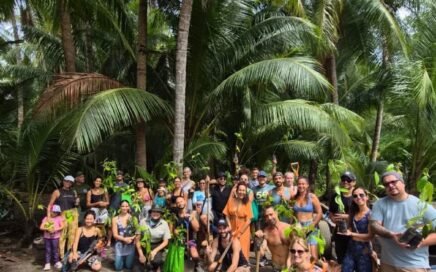
Restoring Nature with GrandiOSA
Grandiosa Costa Rica has a clear goal: to plant 4.000 trees per year. In the Osa region, such reforestation efforts occur regularly, with an average of about 100 trees planted per event

Ancestral Beauty More Than a Store, A Living Community
Located in the heart of Uvita, Ancestral is not just a boutique. A place for the community – something invisible begins to awaken.
Neuroplasticity and Migration
Neuroplasticity and Migration: The Science Behind Your Brain’s Remarkable Adaptation By Dra. Nikole Solano Vargas A Medical Perspective on What Really Happens When You Move to a New Country Have you ever stood in line […]