Red Tides - National Alert
AUTHOR: MCEC Innoceana Costa Rica
PHOTOS: Yulian Cordero
- Different marine conservation organizations classify the situation as a national emergency
- Dozens of marine species have been found dead in the country's seas, including 12 black turtles (Chelonia mydas)
Ojochal, August 14th, 2022 — Despite the imminent danger of entering the ocean when there is a red tide, marine biologist Laura Vanopdenbosch went underwater to understand the situation better. After observing several consecutive days of red tide in the past months, more research was needed.

"I didn't even have 20 centimeters of visibility. It was terrifying: I lost track of where the surface was and where the seabed was. Even the characteristic decomposing smell of red tide was such that it was impossible to breathe naturally. Either way, I had to inspect the situation since there were dozens of dead species floating at different depths," says Vanopdenbosch, the project director of Innoceana's Marine Education and Conservation Center (MCEC).
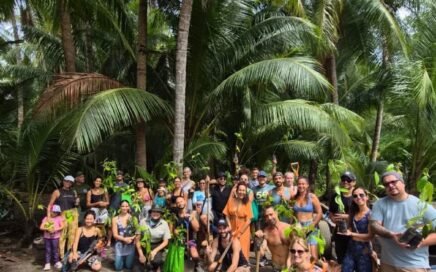
The situation occurred within the framework of one of their marine conservation expeditions in the South Pacific region. The participants —in this case from Argentina, Mexico, the Netherlands, and the United States— were startled to see the tragic scene of destruction.

Red tides are caused by a bloom of microscopic red algae called dinoflagellates and occur primarily because of high levels of nitrates and phosphates reaching the ocean. Generally, these minerals are nutrients from agriculture and, above all, from pesticides and fertilizers. When rains increase, the rivers carry these nitrates and phosphates into the sea, creating a breeding ground for algae, promoting their exponential growth and excessive blooming. Climate change must be added to this cocktail of elements: warmer currents and thermoclines are a favorable environment for algae proliferation.
Even though red tides have been around for years and may have natural causes, they are now occurring with worrying frequency. Using pesticides, fertilizers, and heavy chemicals in Costa Rica has very negative consequences. Other practices that increase the presence of this phenomenon are constructions with unsustainable methods that provoke sediment and fluvial erosion.

What to do, Where to eat and Where to stay…
South Pacific Costa Rica Beaches
Looking for business directories, maps or other printouts? We’ve got that too!
Dare to Discover and Enjoy…
Check out…
Need help planning your next trip to Costa Rica? We look forward to help you!
Email: carlos@ballenatales.com
Phone: +(506) 8946 7134 or +(506) 8914 1568
Skype: ballenatalestravel
Free Costa Rica Magazine #101
Ballena Tales is an essential free digital magazine and travel guide in Costa Rica, valid for travelers, residents,
Weekly Pause Ancestral Beauty
I am sitting in the Ancestral Beauty Boutique on a coarsely woven carpet, surrounded by scattered pens, paper, and small wreaths of leaves and flowers.
Elevated Luxury Homes DESIGNED FOR LIFE IN COSTA RICA
Elevated Luxury Homes DESIGNED FOR LIFE IN COSTA RICA Text adapted: Carlos Leon Whether you seek a modern retreat, a custom luxury villa, or your forever home, we are the Costa Rica home builder committed […]
Debunking myths about Costa Rica’s South Pacific destination
There is false information circulating that suggests the South Pacific Costa Rica is an expensive destination
Beach Clean Up in Uvita: Community Spirit in Action at Marino Ballena National Park
Beach Clean Up in Uvita Community Spirit in Action at Marino Ballena National Park Author: Sophie Schindler
Costa Rica’s First 100% Gluten-Free Gourmet Restaurant
Costa Rica’s First 100% Gluten-Free Gourmet Restaurant La Palapa Restaurant: Indulgence Without Compromise Travelers come to Costa Rica seeking nature, adventure – and memorable dining. At Cuna del Ángel, a boutique hotel nestled in the […]