Never Shake Hands With a Sloth
Author: Jack Ewing
Everybody who visits Hacienda Barú wants to see a sloth, and their first sighting is always an unforgettable experience.
Mine was probably more unforgettable than most. “Don Jack, don Jack come, look.” Adolfo was standing beside a fallen cecropia tree. I walked over, and there it was, arms wrapped around the trunk, my first sloth. I thought my first monkey sighting was exciting, but this was phenomenal. It reached out toward me in slow motion and opened its three-clawed hand. Innocently I stuck my index finger in the hand, and in slow motion, it began closing.
“How cool. It wants to squeeze my finger. What a friendly gesture”. Ever so slowly but steadily, the long-clawed fingers kept closing. The grasp became tighter and tighter. I remember thinking it was becoming less of a friendly squeeze and more like the jaws of a vice clamping down on my finger. Removing my finger was no longer possible. A bolt of fear shot through my body. “It’s going to crush my finger completely, bone and all.” I didn’t know whether to pull as hard as possible, beat the sloth with my other fist, or remain calm. I was on the verge of panic when the strong hand stopped squeezing and leisurely relaxed its grip. Two seconds later, the fear left me, and my finger came in a flash.
Adolfo laughed. “If you want to touch it, you gotta grab it from behind. Stay clear of its hands”. We released it in the forest on a tree that Adolfo assured me was one that sloths like.
That occurrence occurred in the early 1970s, and I’ve seen a lot of sloths since then. Beginning in the mid-1990s, I guided a tour at Hacienda Barú, where we took people into the rainforest canopy by climbing ropes using rock equipment and techniques. In addition to the thrill, the time was notable for seeing sloths in their element, often up close.
One day a female three-toed sloth appeared in a neighboring tree on a branch that almost touched the ropes we were climbing. The visitors were delighted and took loads of photos. The next day she was still there, but even closer than the day before and hanging face up with a tiny baby lying on her belly. It must have been born the night before.
I became infatuated with the maternal care of sloth babies and read everything I could find. A couple of weeks later, I was climbing the tree by myself to inspect the rope attachments. I could see the mother from below and was delighted that I would pass within arm’s length of her. Arriving at her level, I could see that she was eating, chewing on leaves to the point that a green foam was forming at the edge of her mouth, and the baby was busy licking it up as fast as it oozed from between her lips. I was overwhelmed. I had just read about this the night before. Like all mammal babies, the sloth nurses its mother’s milk beginning almost immediately after birth. After a few weeks, it moves on to the next stage, which I watched, lapping up the green foam. Later it would eat partially chewed leaves, then young tender leaves, and eventually a variety of foliage like mom.
When the juvenile is about six months old, the mother abandons it in the area where it has been raised and with which it is familiar. This is not as easy as it sounds because the young one will probably try to follow. Mom is faster and more agile and can get away and into a different territory unfamiliar to the youngster, but both usually get a good workout before the kid gives up and turns back. I am still fascinated with sloths 45 years after that first and only handshake, or should I say, “finger shake.”
What to do, Where to eat and Where to stay…
South Pacific Costa Rica Beaches
Looking for business directories, maps or other printouts? We’ve got that too!
Dare to Discover and Enjoy…
Check out…
Need help planning your next trip to Costa Rica? We look forward to help you!
Email: carlos@ballenatales.com
Phone: +(506) 8946 7134 or +(506) 8914 1568
Skype: ballenatalestravel
Costa Rica Free Magazine 102 Whales Season
With our usual enthusiasm, we proudly present digital edition #102 of Ballena Tales Free Magazine.
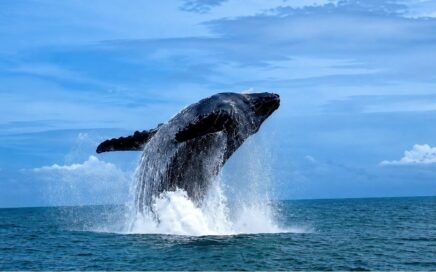
Whale and Dolphin Festival at Marino Ballena National Park
Every year, the waters of the Costa Rican Pacific come alive with the Whale and Dolphin Festival, held near Marino Ballena National Park in Uvita
Capturing The Essence of Culture and Community on The Coast
Capturing The Essence of Culture and Community on The Coast Whether on land, undersea, or in the air, photographer Brad Dean will likely be found in full focus behind the lens of his camera. Having […]

Green and Clean Home Maintenance Inside and Out
Home maintenance requires a lot of time, and in today’s fast-paced world, the demands of professional responsibilities and family life leave little room for it.

Fractional Plasma: A Modern Approach to Skin Renewal
Fractional plasma rejuvenation uses ionized gas or plasma to deliver controlled thermal energy to the skin
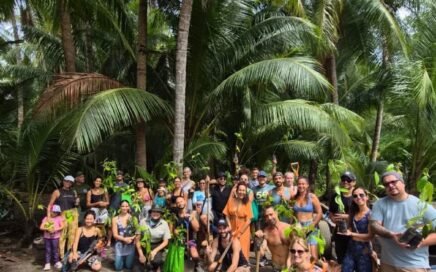
Restoring Nature with GrandiOSA
Grandiosa Costa Rica has a clear goal: to plant 4.000 trees per year. In the Osa region, such reforestation efforts occur regularly, with an average of about 100 trees planted per event

Ancestral Beauty More Than a Store, A Living Community
Located in the heart of Uvita, Ancestral is not just a boutique. A place for the community – something invisible begins to awaken.

Neuroplasticity and Migration
Neuroplasticity and Migration: The Science Behind Your Brain’s Remarkable Adaptation By Dra. Nikole Solano Vargas A Medical Perspective on What Really Happens When You Move to a New Country Have you ever stood in line […]

Biostimulators and exosomes: new strategies for skin rejuvenation
Biostimulators are injectable agents that stimulate the production of collagen and elastin, essential proteins responsible for skin structural integrity.
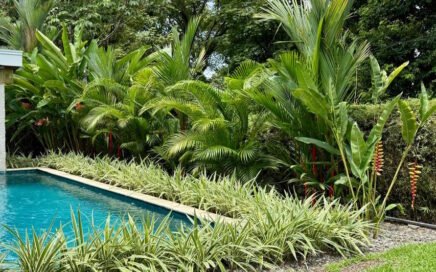
From gardening in Austria to gardening in paradise
From gardening in Austria to gardening in paradise Author: Elisabeth Frankel EDITORS’ NOTE: Dear readers, We are proud to include this wonderful article in this edition. Ms. Frankel contacted us to say that she had […]