Veganism is on the rise – and it is far more than a food trend!
It leads to a lifestyle based on sustainability and compassion.
The three pillars of veganism are:
1. Compassion for all animals (i.e. an understanding that there is no difference between a chicken or a dog, a calf, or a cat).
2. The concern and care for environmental issues (i.e. massive land use and pollution caused by life stock farming, pesticides, antibiotics, etc.); and
3. The positive effects on health (i.e., low cholesterol, no lactose intolerance, a pure conscience, etc.).

AFU – Academy of Football Uvita
A football academy in which, apart from sporting fun, players are trained to their maximum potential on and…

Being on the first page of Google
For the “keywords” accommodation, restaurants, and bienes raices, (Costa Ballena place) our website Ballena Tales is positioned on the first page of Google

Ventanas Beach
Ventanas Beach is in the Puntarenas province, 235 kilometers (146 miles) south of San Jose and 12 kilometers (7.5 miles) south of Uvita,

How YOU can help the local economy
Indeed, most of the Costa Ballena region is dependent on tourism. Given that as the background, we hear from our homeowners, clients, and the social media channels: What can we do to help with the local economy?

Where does your native timber come from?
Most of the construction on the Costa Ballena and Osa Peninsula is done by hotels and second-home builders drawn by the lush rainforest. Native timber feels like an obvious choice: who doesn’t love a handcrafted Cristobal door’s luxury?

In Osa the history travels by bicycle
It is an exhibition with identity, designed by and for the inhabitants of the Osa Canton. It is a temporary exhibition “In Osa history travels by bicycle,” which you can admire at the Finca 6 Museum site, in Palmar Sur.
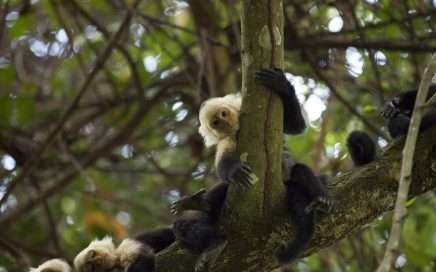
The Strange Behavior of a Gang of Teenage Monkeys
The whole gang of teenage monkeys turned tail, ran for the fig tree, scuffled for a position, and ascended to the crown. Once safe from the mother raccoon, they seemed to lose interest in her, like a person trying to forget an embarrassing incident and pretending it never happened. The monkeys returned to their vagrant behavior, and mama continued about her business with her cubs at her side.
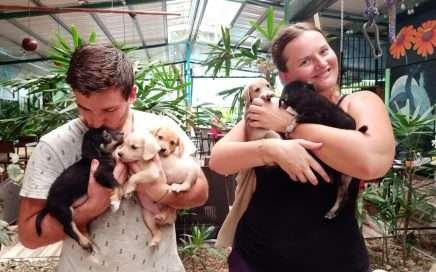
Typical Week in the Life of a Dog and Cat Rescue Organization
DAWG is a Dog and Cat Rescue Organization, provided food, a medicated shampoo, vet care, a crate and a puppy pen.
Another week went by, and another puppy showed up at the property beside the hotel, so then there were five puppies!!!